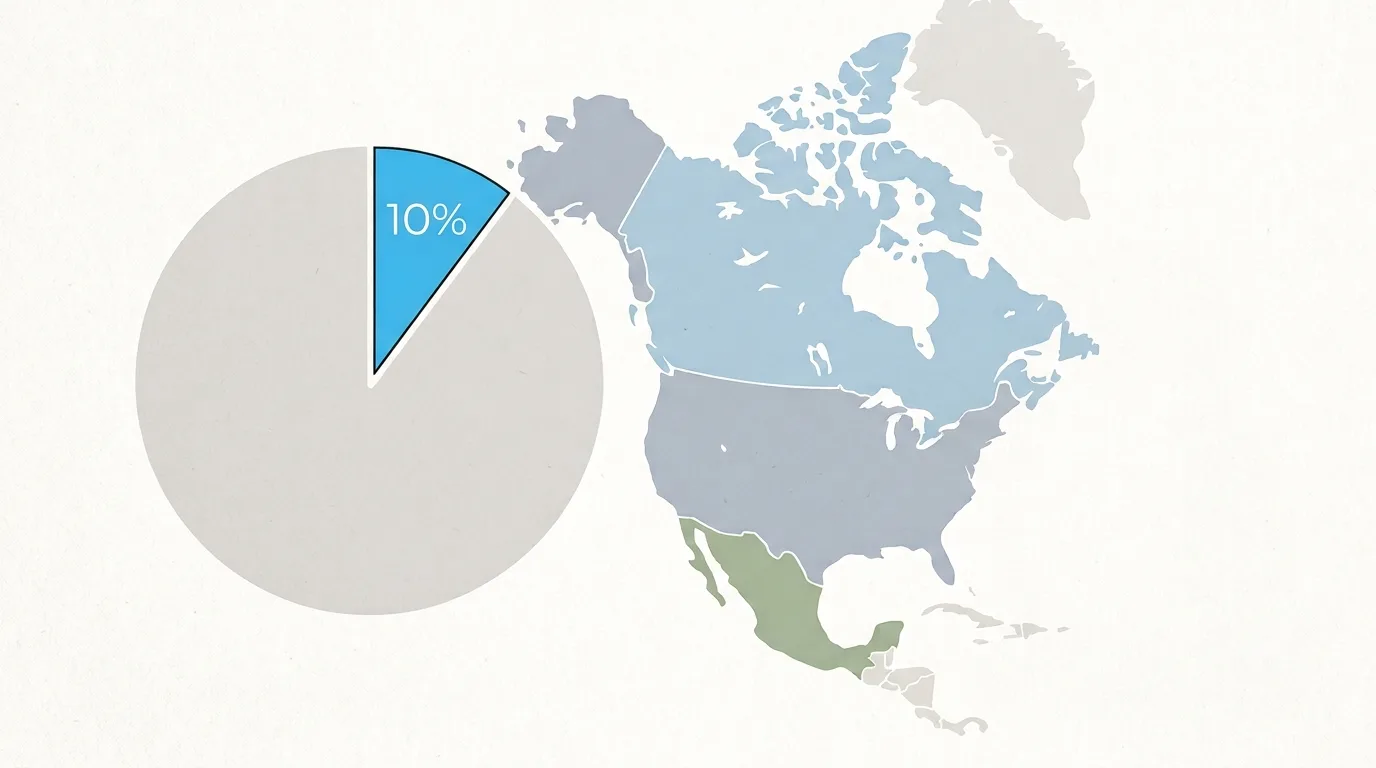
For the first time, Linux desktop usage in North America has crossed the double-digit threshold, according to StatCounter’s latest data covering July 2025 through July 2026. The open-source operating system now sits at 10.65% of the desktop market across the continent, a number that would have seemed like wishful thinking just a few years ago.
To put that in perspective: Windows still dominates with 57.54%, and OS X holds 21.07%, while the combined macOS figure registers 8.63%. Linux now stands alone above the 10% line, and that’s not a rounding error or a fluke month, it’s a sustained milestone based on over 3 billion monthly page views tracked by StatCounter.
Why This Actually Matters
For everyday Linux users, this isn’t just a bragging-rights number. A 10% share changes the calculus for hardware manufacturers, game publishers, and software vendors. When a platform crosses that psychological threshold, it stops being “niche” in boardrooms and starts being “worth supporting.” Think about it: one in ten desktop users in North America is running Linux. That’s a market no serious company can afford to ignore.
This is the kind of metric that drives real-world decisions, more native Steam games, better driver support from OEMs, and fewer “we don’t support Linux” replies from customer support. The ecosystem has been building toward this for years, but the number finally landing in double digits gives the broader industry permission to take the platform seriously.
What’s Driving the Growth
While StatCounter’s raw numbers don’t break down why people are switching, the usual suspects are all in play. Privacy-conscious users fleeing Windows’ telemetry, developers who’ve grown tired of macOS’s hardware lock-in, and the sheer polish of modern distributions like Ubuntu, Fedora, and Mint have all contributed. Valve’s Proton compatibility layer, which lets Linux users play thousands of Windows games, has also pulled in a wave of gamers who previously saw the platform as a non-starter.
The COVID-era remote work shift may have also played a role. IT departments that once standardized on Windows are now more willing to let engineers run whatever works, and “whatever works” often means Linux.
What Comes Next
The 10% mark is a milestone, not a finish line. The real test is whether Linux can hold this ground and continue climbing. If the trend holds, expect more aggressive hardware certification programs, better out-of-the-box support for peripherals, and maybe, just maybe, a serious look from Adobe or other holdout software giants.
For now, if you’re already running Linux, you’re no longer the outlier you used to be. And if you’ve been on the fence about switching, the math just got a little easier: the ecosystem you’d be joining is now 10% of the continent and growing.