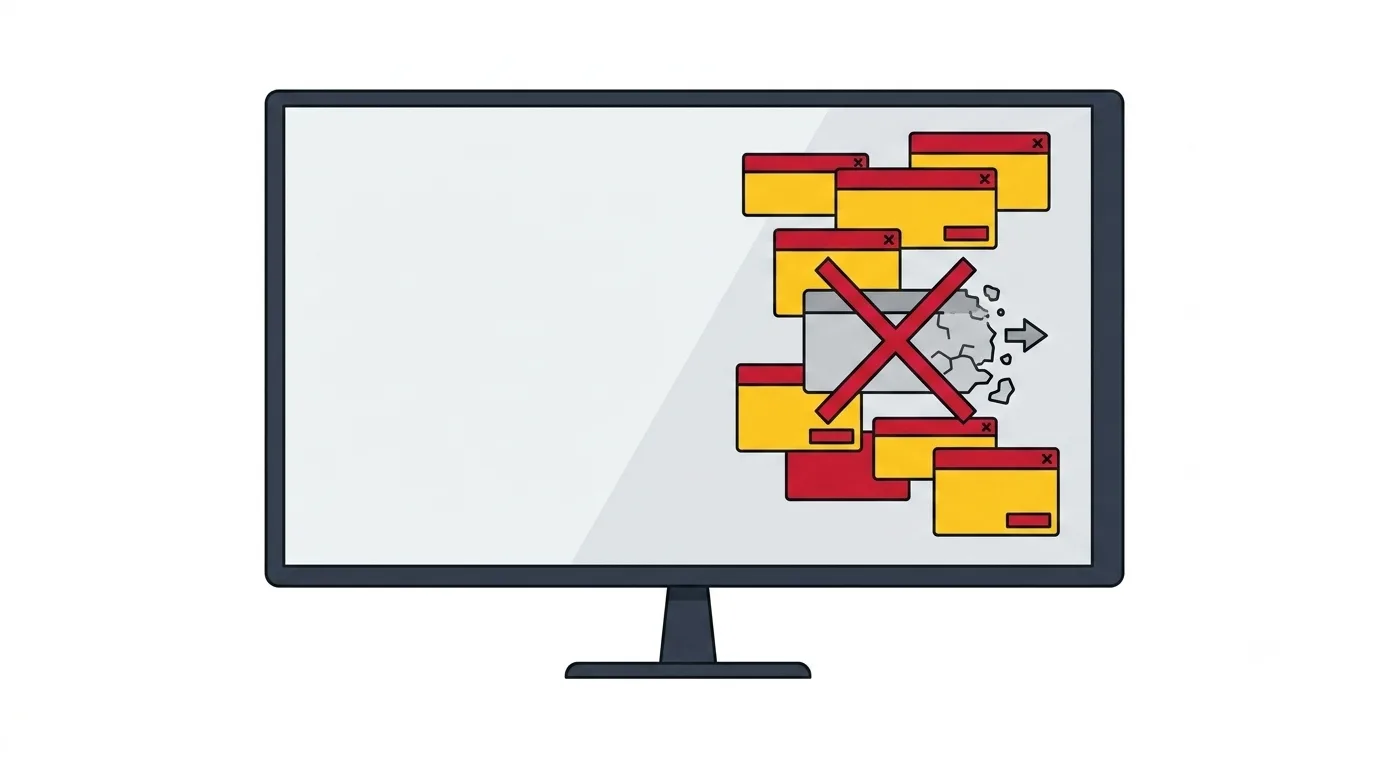
LG has agreed to remove a McAfee antivirus pop-up that its monitors were silently installing on Windows 11 PCs, Microsoft confirmed this week, following a wave of investigations and user complaints about the company’s bundled monitor software. The fix addresses the most visible symptom of the controversy, but it leaves the underlying delivery mechanism and the broad system permissions attached to it, untouched for now.
The issue first surfaced after GamersNexus and other outlets, corroborating widespread Reddit reports, found that connecting certain LG UltraGear monitors, including the 34GX900A-B to a freshly installed Windows 11 PC triggered an automatic software install with no prompt or user approval. The installer piggybacked on Windows Update, so the software arrived the moment a user ran a routine system update, not through any monitor-branded setup screen a buyer would recognize and consent to.
Once installed, the LG Monitor App Installer displayed pop-ups promoting a 30-day McAfee antivirus trial and was reportedly difficult to disable short of manually uninstalling the app. Investigators also flagged that the app’s Microsoft Store listing requested sweeping permissions, including access to “all system resources,” plus geolocation, online activity, and contact data. A permissions footprint that drew scrutiny given the app’s stated function is managing a monitor’s on-screen display settings.
Whats The Fix?
Microsoft’s intervention, confirmed in a statement from Pavan Davuluri, the company’s EVP of Windows and devices, secures LG’s agreement to strip the McAfee promotion out of the app. That resolves the piece of the story that generated the most visible user complaints: unwanted ads appearing on a paid product without consent.
Why This Matters
Taken together, the facts point to a problem that’s bigger than one bad pop-up: Windows 11’s default handling of peripheral-bundled software gave a hardware vendor a route to install adware-adjacent code with minimal friction and minimal disclosure. That’s a Windows platform question as much as an LG one, and it raises the obvious follow-up whether other monitor and peripheral makers are using the same automatic-install pathway for their own bundled utilities, something none of the current reporting has established one way or the other.
Still, the permissions and silent-delivery questions are the parts of this story most likely to resurface. Whether Microsoft tightens the automatic device-app policy that made the install possible, and whether LG revises what its monitor software actually requests access to, are the two threads worth watching next.